1. Project Overview
House of Design is a project stemming from the study in the Information Modelling and Web Technologies course. Through this project, we aim to create an engaging, informative website that showcases the artistic and practical value of interior design objects. The project features 19 selected pieces, created by six well-known designers who have shaped the history of industrial design. These pieces are thoughtfully placed in a purpose-designed house, aiming to elevate the perception of interior design and celebrate it as a powerful art form that enhances our spaces. By situating these objects within a real-world context, we demonstrate their practical value beyond museum displays, reinforcing interior design’s role as a significant form of art.
This exhibition, contextualises iconic design pieces within a household setting, allowing them to communicate, provoke reflection, and connect past and future. These pieces, more than mere objects, are cultural artefacts that have shaped our relationship with time, space, and daily essentials, underscoring how interior design creativity enriches everyday life. Reflecting this, our project balances usability with aesthetic appeal, aiming to create a website that is both functional and visually refined, just as these design objects are crafted to be both ergonomic and beautiful in everyday use
To be achieved using high-quality images and accurate 3d models, descriptions, and
commentary that focus on the artistry of interior design.
1.2 Objects and Designers
We selected 19 pieces from Triennale’s permanent collection, spanning from the 1950s to the 1990s, to illustrate how the evolution of design is not merely about aesthetics but also reflects changing relationships with time and space. Over the decades, design adapted to faster routines, greater efficiency, smaller living spaces, and the integration of technology.
The selected pieces were created by seven visionary designers—Enzo Mari, Vico Magistretti, Ettore Sottsass Jr., Achille Castiglioni, Marco Zanuso, Joe Colombo and Gerenzani Pietro—who have profoundly shaped the history of industrial design.
These objects showcase how items that were once considered luxurious status symbols, such as televisions and washing machines, have become accessible essentials with central roles in our daily lives. These pieces embody not just design innovation but also cultural shifts, illustrating how creativity and functionality can coexist to meet the needs of modern living.
1.3 Project Goals
The project’s main objective is to develop a digital experience that complements physical exhibits, enhancing the educational value of a collection through a website and a digital tool to enrich the exhibition experience. This experience aims to:
- Contextualize objects within a domestic space outside of a museum environment
- Emphasize the aesthetic and practical value of interior design
- Showcase the craftsmanship, creativity, and historical relevance of diverse design styles
Our goal is to make design accessible and engaging, providing universal access to heritage and promoting interaction with design as an art form.
1.4 Storytelling and Narrative Development
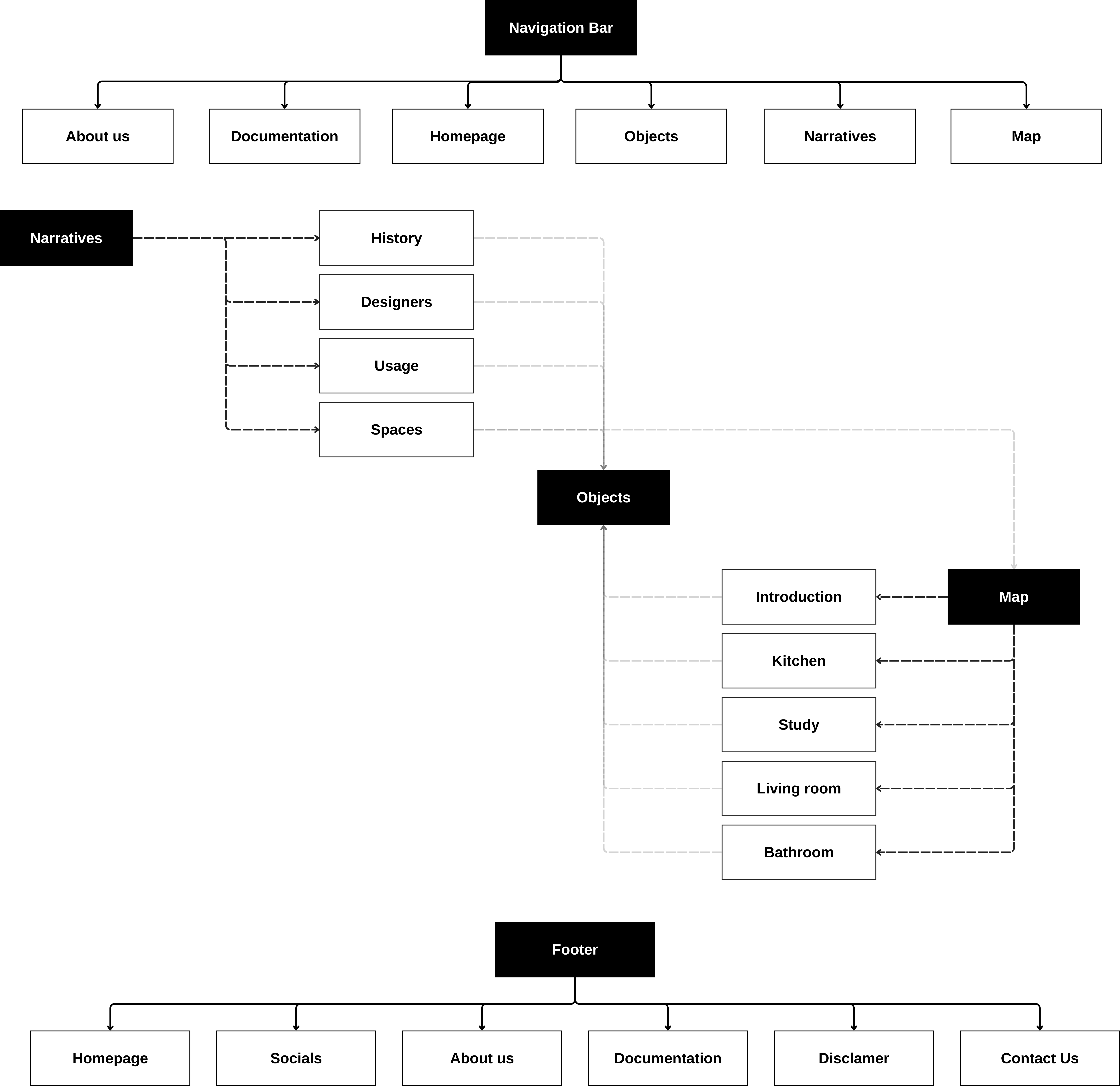
To achieve universal accessibility and meaningful engagement with heritage, we’ve developed various narrative perspectives and layers of description. Users can experience the exhibition from different perspectives through distinct storylines:
- History
- Designers
- Usage
- Space
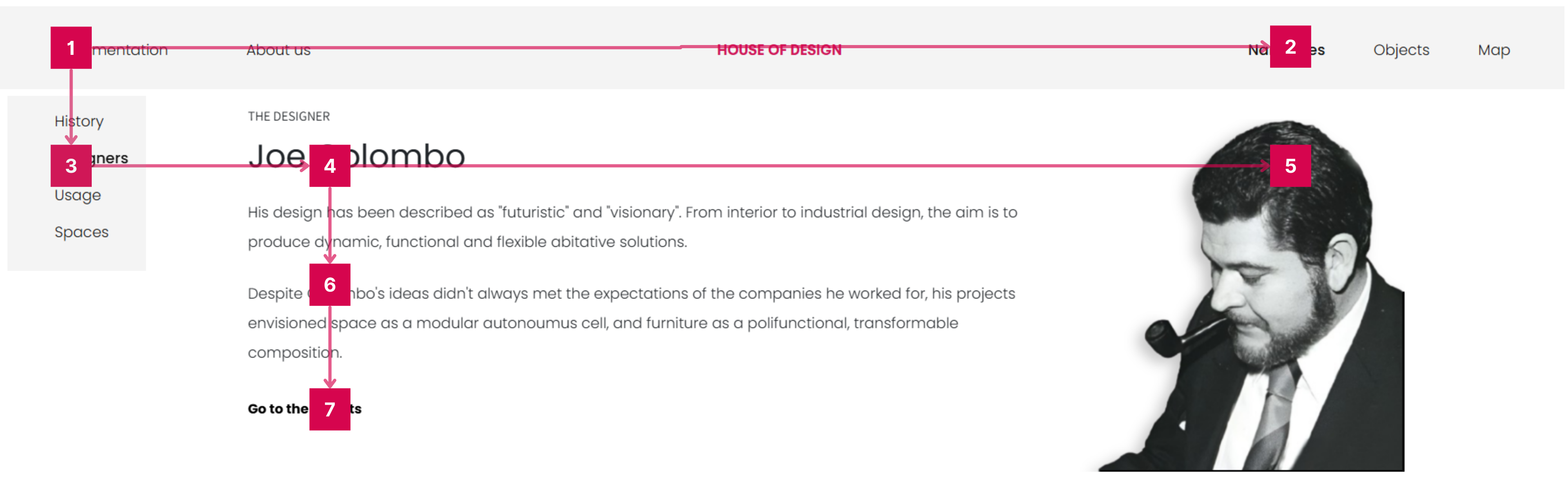
We’ve structured the narrative in layers, from introductory to detailed, allowing a wide range of audiences, from children to non-experts, to explore and enjoy the exhibition. Interactive click buttons enable users to access additional information and deepen their experience as desired.
1.5 Target Users
The project is designed to make exhibitions more interactive, immersive, and educational, accommodating diverse users across age groups, expertise levels, and available time:
- Young audiences: we’ve integrated short texts, interactive click buttons, and image carousels to maintain interest and engagement.
- General visitors: those seeking a cultural experience without extensive expertise can choose among narratives and engage at their own pace.
- Enthusiasts and professionals: for those interested in detailed exploration, we provide in-depth insights into design history, designers, spatial organisation, and detailed views of the 19 objects, making the site suitable for research.
We’ve structured the narrative in layers, from introductory to detailed, allowing a wide range of audiences, from children to non-experts, to explore and enjoy the exhibition. Interactive click buttons enable users to access additional information and deepen their experience as desired.